Pascal Monti on the art of listening, the personality of an instrument, and the invisible craftsmanship behind great piano performances
By Oxana Arkaeva
August 25, 2026, Schwarzenberg
Opera Views: Visitors to the Schubertiade experience great pianists and great musical moments. You work behind the scenes to make those moments possible. What happens to a concert piano before the pianist plays the first note?
Pascal Monti: Our concert grand piano belongs to the Schubertiade and is first transported to Schwarzenberg. Ideally, it arrives three or four days before the festival begins so that it can acclimatize. The instrument is made of natural materials – the soundboard in particular reacts to changes in climate. After transport, I consequently check both interchangeable actions of the grand piano – one for solo repertoire and one for Lieder – as well as the regulation and voicing. The instrument changes through concerts, transportation, and playing. The aim is to adapt the grand piano to the hall so that it produces a beautiful, carrying, singing sound.
Opera Views: You once described your work as a kind of mediation between pianist and piano. What does that mean in practice? Do you tune a piano – or, in a sense, do you tune it according to the individual requirement of the pianist?
Pascal Monti: The role of mediator is not really about tuning. It is more about balancing a pianist’s expectations with how I can implement them as a concert technician. There is an exchange between the pianist and me, and I have to assess whether they are satisfied. I give the pianist a tool to work with. If something still doesn’t feel right to the pianist, I try to accommodate their wishes. Of course, there are limits. But wherever adjustments are possible, I can intervene.
Opera Views: The word “Stimme” (voice in German) is inherent in what you do. When we speak of the human voice, we mean much more than simply producing the correct pitch or timbre; we mean volume, dynamics, expression, and personality. Does a piano also have a voice, a personality of its own?
Pascal Monti: I can answer that very clearly: yes. Every instrument has its own personality, sound character, and timbre. When the hammers strike the strings, they set them into vibration, which in turn causes the soundboard to vibrate. The nature of the soundboard is essential to the sound’s carrying power. A piano is made from wood and other natural materials that react to their environment. That is why the tuning, the pitch, is constantly changing too. It is not only about bringing out the best in an instrument, but also about recognizing its limitations. Simply put: I cannot turn a VW into a Ferrari. The same applies to a piano.
Opera Views: A singer can hit every note correctly and still fail to reach us emotionally. Can a piano be technically perfectly tuned and still not sound good?
Pascal Monti: We could probably talk about that for a while– and opinions will undoubtedly differ. There are two aspects: tone color and feeling of the mechanics. The perception of tone color is highly individual. But I can certainly tell whether a grand piano has what we call “gaps,” or inconsistencies, in its sound. If you play chromatically through the entire instrument in an even legato, you can hear those differences. Pianists also possess an incredibly refined sensitivity to sound. They notice the smallest differences – for example, how deeply a key sinks or how quickly the hammer head moves.
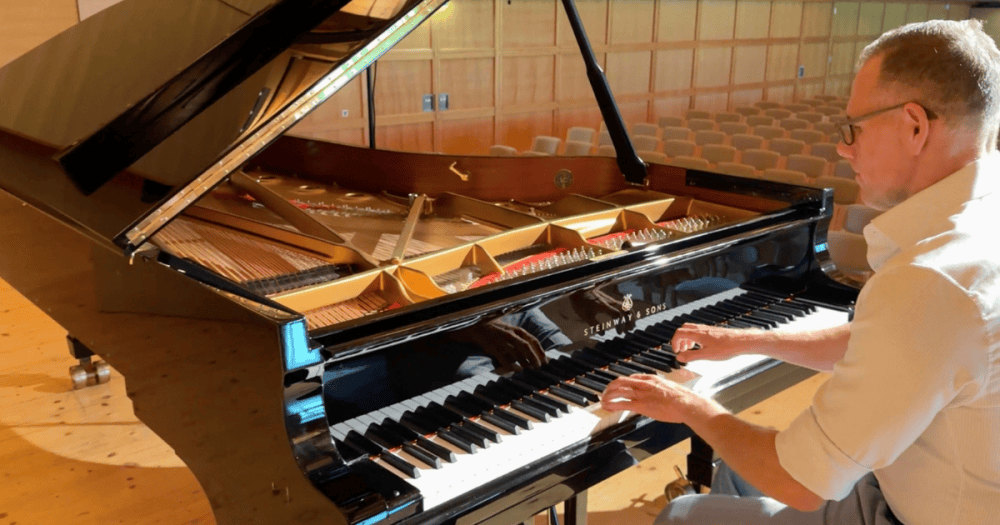
Opera Views: You probably hear the piano sound very differently from most people in the audience. What do you hear that we don’t? Can this particular way of listening be learned, or does it require a special talent?
Pascal Monti: Yes, I do hear differently from the audience; I hear the finest gradations of dynamics and tone color. As a piano tuner, you also need to have your own concept of sound: How should this particular instrument sound in this particular hall – open or singing, brighter or darker? Being able to play the piano also helps enormously. You don’t have to be a concert pianist, but you need a certain level of pianistic skill to test, hear, and play the instrument yourself. Alfred Brendel also described this idea in his book Nachdenken über Musik (Reflections on Music).
This particular way of listening can be learned. Talent helps, but experience, time, patience, an interest in shaping sound, and the pleasure of working with the instrument matter more.
Opera Views: Many industry branches lack skilled, young professionals. What is the situation for the next generation of piano makers and tuners?
Pascal Monti: We need the next generation, and there is certainly interest among young people. Increasingly, adults are also choosing this profession as a second career. The bigger problem is finding an apprenticeship or a company willing to invest the time needed to train someone.
In Switzerland, I teach inter-company courses at the Kompetenzzentrum für Musikinstrumentenbau Arenenberg (Competence Center for Musical Instrument Making at Arenenberg). An important aspect of this training: Only a small number of piano makers are trained nationwide each year. Piano making is one of what we call the “small professions.” That’s why every apprenticeship position matters if this profession is to survive.
Opera Views: That leads perfectly to my next question: What would your ideal apprentice be like?
Pascal Monti: My ideal apprentice should bring a genuine interest in music, enjoyment of fine, detailed work and sound shaping, and manual skills. We work with tools, varnishes and glues, much like a carpenter works with planes and chisels. A trained ear, patience, sensitivity, a good eye, and a touch of obsession also matter. An instrument must not only be heard; it must also be seen and felt. Understanding people and enjoying working with musicians ultimately help turn this profession into a vocation.
Opera Views: Digitalization, new technologies and artificial intelligence are transforming many professions. Which of these developments will change your profession – and what aspects of piano tuning will always remain a human experience?
Pascal Monti: I think our profession will only be affected by AI to a limited extent. AI cannot replace the human ear, sensitivity, or mastery. Our profession is closely tied to craftsmanship, and technology hasn’t yet reached the point where it can replace it. Hopefully, it never will.
Modern technology already has an impact, however, particularly on material processing, manufacturing, and analysis. For example, 3D printing is used in piano making, including for certain mechanical components. But AI still cannot tap, hear, or feel.
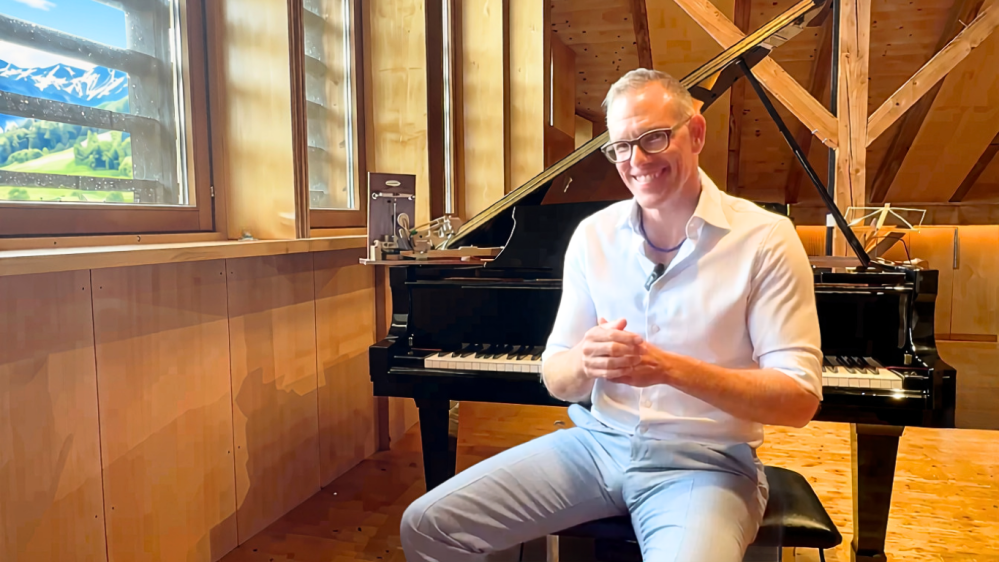
Opera Views: And here comes your last, a bonus question: If pianos had never existed in your life, what would have become of Pascal Monti?
AI cannot replace the human ear, sensitivity, or mastery. Our profession is closely tied to craftsmanship, and technology hasn’t yet reached the point where it can replace it. Hopefully, it never will.
Pascal Monti: It would still have had something to do with music. One of my great passions is musical theatre, so I’d be a musical theatre performer. The main centers for that are London and New York, and I have been fortunate enough to perform in many musicals: dancing, singing, and, of course, acting. If I could turn back the clock, perhaps I would have explored that path more intensively from the very beginning. But I have still been fortunate enough to pursue it as a passionate hobby. Maybe in my next life.
Opera Views: Mr Monti, thank you very much for the interview. I wish you a successful conclusion to the Schubertiade – and I hope to see you again in 2027.

