Premiere of the Bregenz Festival Opera Studio production on 17 August 2026 at the Theater am Kornmarkt
By Oxana Arkaeva
What does it take for unrequited love suddenly to be returned? A magic potion? A dose of courage? Or simply that moment when two people stop playing roles in front of one another?
Almost 200 years after its premiere, Gaetano Donizetti’s L’elisir d’amore (The Elixir of Love) has lost none of its relevance; beneath the apparently light-hearted comedy lie questions of love, self-worth, deception and the longing to be loved.
The Story
Nemorino is in love with the self-assured Adina, but she initially rejects him and instead turns her attention to the vain Belcore. Desperate, Nemorino buys a supposed love potion from the quack doctor Dulcamara – in reality, nothing more than wine – and waits for it to take effect. When all the women suddenly begin showing an interest in him, he believes the potion is working; in fact, they have learned that Nemorino has unexpectedly inherited a fortune. Eventually, Adina recognises her own feelings for him, buys him out of his military contract and confesses her love.
„L’elisir d’amore“ Bregenzer Festspiele ©anja koehler | anjakoehler.de Urheberrechtlich Geschütztes Bildmaterial. Veröffentlichung zur Presseberichterstattung über Bregenzer Festspiele honorarfrei gestattet. Keine unerlaubte Veröffentlichung und Vervielfältigung. Inhaltliche oder bildgestalterische Veränderung der Fotografien nicht gestattet. Bildnachweis “© anja koehler” ist Voraussetzung. Auf Instagram ist der Credit / Link „@anjakoehler.photo“ Voraussetzung. 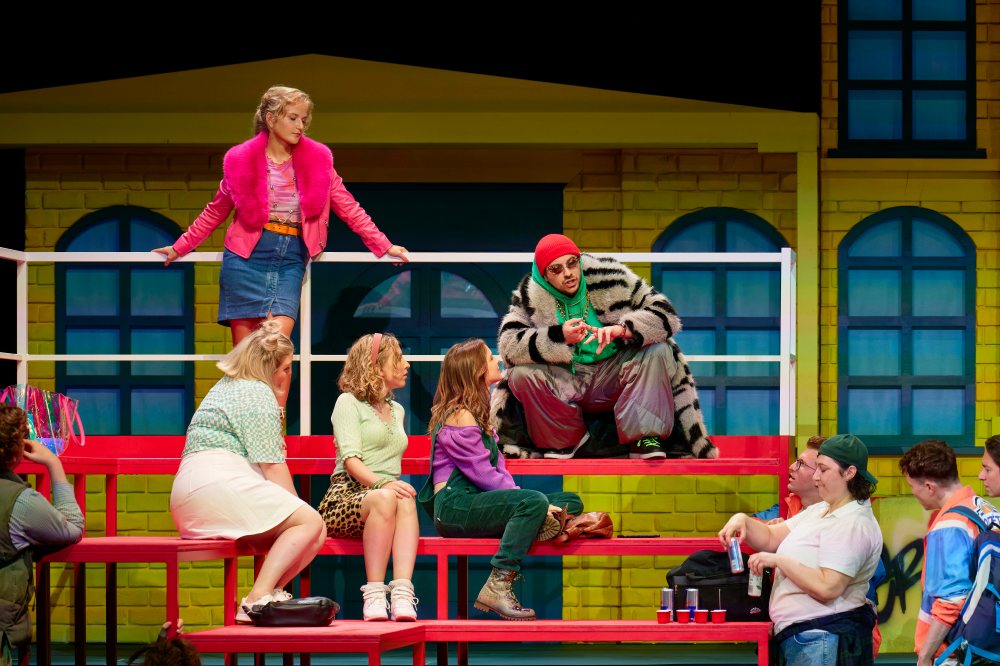
„L’elisir d’amore“ Bregenzer Festspiele ©anja koehler | anjakoehler.de Urheberrechtlich Geschütztes Bildmaterial. Veröffentlichung zur Presseberichterstattung über Bregenzer Festspiele honorarfrei gestattet. Keine unerlaubte Veröffentlichung und Vervielfältigung. Inhaltliche oder bildgestalterische Veränderung der Fotografien nicht gestattet. Bildnachweis “© anja koehler” ist Voraussetzung. Auf Instagram ist der Credit / Link „@anjakoehler.photo“ Voraussetzung. 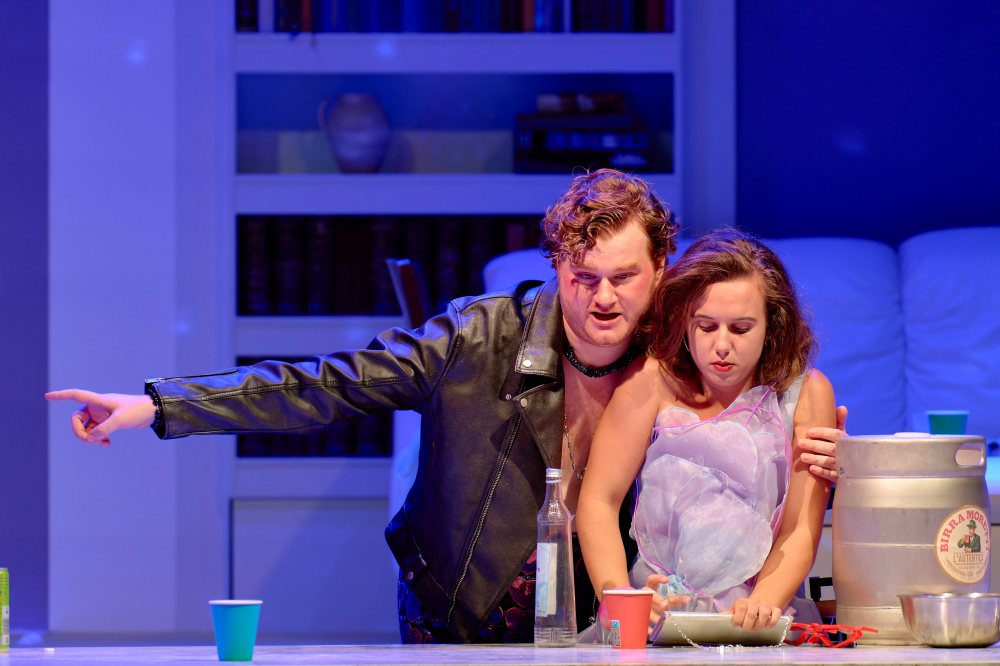
Bregenzer Festspiele ©anja koehler | anjakoehler.de Urheberrechtlich Geschütztes Bildmaterial. Veröffentlichung zur Presseberichterstattung über Bregenzer Festspiele honorarfrei gestattet. Keine unerlaubte Veröffentlichung und Vervielfältigung. Inhaltliche oder bildgestalterische Veränderung der Fotografien nicht gestattet. Bildnachweis “© anja koehler” ist Voraussetzung. Auf Instagram ist der Credit / Link „@anjakoehler.photo“ Voraussetzung. 
„L’elisir d’amore“ Bregenzer Festspiele ©anja koehler | anjakoehler.de Urheberrechtlich Geschütztes Bildmaterial. Veröffentlichung zur Presseberichterstattung über Bregenzer Festspiele honorarfrei gestattet. Keine unerlaubte Veröffentlichung und Vervielfältigung. Inhaltliche oder bildgestalterische Veränderung der Fotografien nicht gestattet. Bildnachweis “© anja koehler” ist Voraussetzung. Auf Instagram ist der Credit / Link „@anjakoehler.photo“ Voraussetzung. 
„L’Elisir d’Amore“ Bregenzer Festspiele ©anja koehler | anjakoehler.de Urheberrechtlich Geschütztes Bildmaterial. Veröffentlichung zur Presseberichterstattung über Bregenzer Festspiele honorarfrei gestattet. Keine unerlaubte Veröffentlichung und Vervielfältigung. Inhaltliche oder bildgestalterische Veränderung der Fotografien nicht gestattet. Bildnachweis “© anja koehler” ist Voraussetzung. Auf Instagram ist der Credit / Link „@anjakoehler.photo“ Voraussetzung. 
„L’Elisir d’Amore“ Bregenzer Festspiele ©anja koehler | anjakoehler.de Urheberrechtlich Geschütztes Bildmaterial. Veröffentlichung zur Presseberichterstattung über Bregenzer Festspiele honorarfrei gestattet. Keine unerlaubte Veröffentlichung und Vervielfältigung. Inhaltliche oder bildgestalterische Veränderung der Fotografien nicht gestattet. Bildnachweis “© anja koehler” ist Voraussetzung. Auf Instagram ist der Credit / Link „@anjakoehler.photo“ Voraussetzung. 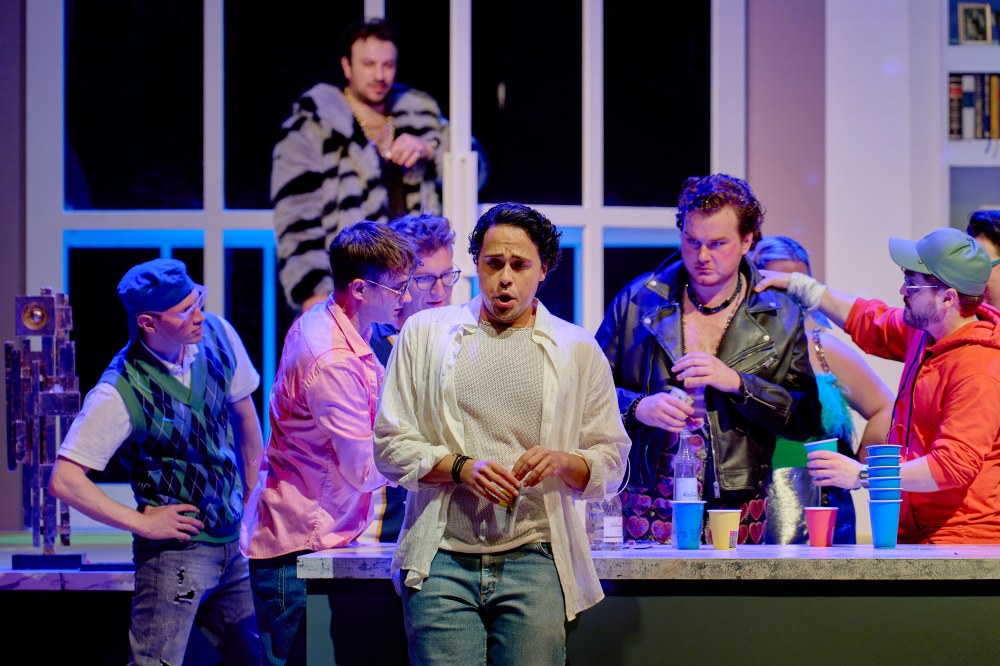
„L’Elisir d’Amore“ Bregenzer Festspiele ©anja koehler | anjakoehler.de Urheberrechtlich Geschütztes Bildmaterial. Veröffentlichung zur Presseberichterstattung über Bregenzer Festspiele honorarfrei gestattet. Keine unerlaubte Veröffentlichung und Vervielfältigung. Inhaltliche oder bildgestalterische Veränderung der Fotografien nicht gestattet. Bildnachweis “© anja koehler” ist Voraussetzung. Auf Instagram ist der Credit / Link „@anjakoehler.photo“ Voraussetzung. 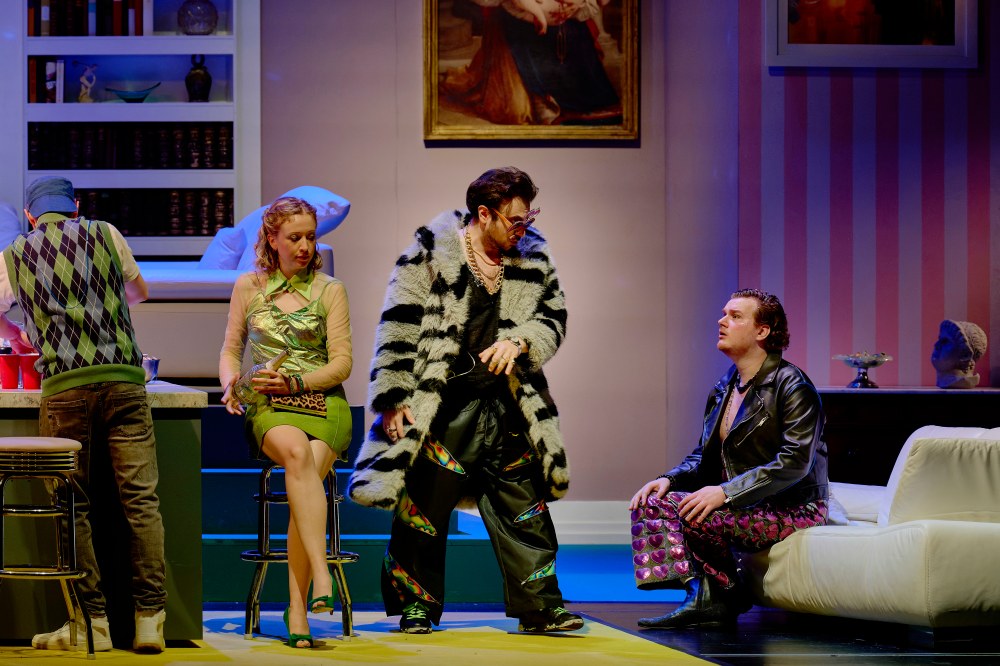
„L’Elisir d’Amore“ Bregenzer Festspiele ©anja koehler | anjakoehler.de Urheberrechtlich Geschütztes Bildmaterial. Veröffentlichung zur Presseberichterstattung über Bregenzer Festspiele honorarfrei gestattet. Keine unerlaubte Veröffentlichung und Vervielfältigung. Inhaltliche oder bildgestalterische Veränderung der Fotografien nicht gestattet. Bildnachweis “© anja koehler” ist Voraussetzung. Auf Instagram ist der Credit / Link „@anjakoehler.photo“ Voraussetzung. 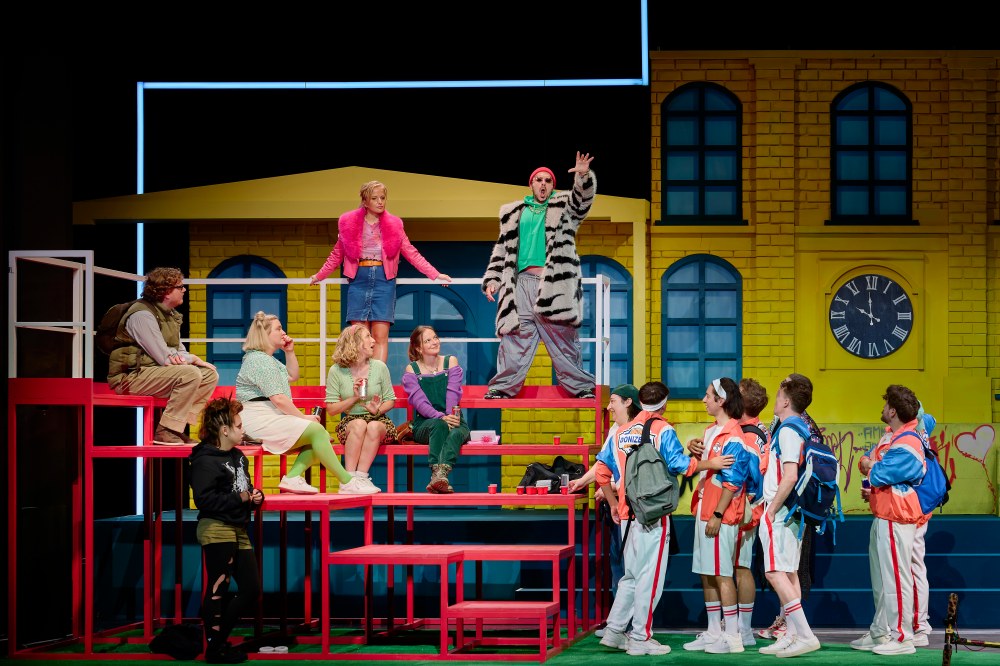
„L’Elisir d’Amore“ Bregenzer Festspiele ©anja koehler | anjakoehler.de Urheberrechtlich Geschütztes Bildmaterial. Veröffentlichung zur Presseberichterstattung über Bregenzer Festspiele honorarfrei gestattet. Keine unerlaubte Veröffentlichung und Vervielfältigung. Inhaltliche oder bildgestalterische Veränderung der Fotografien nicht gestattet. Bildnachweis “© anja koehler” ist Voraussetzung. Auf Instagram ist der Credit / Link „@anjakoehler.photo“ Voraussetzung.
The Production
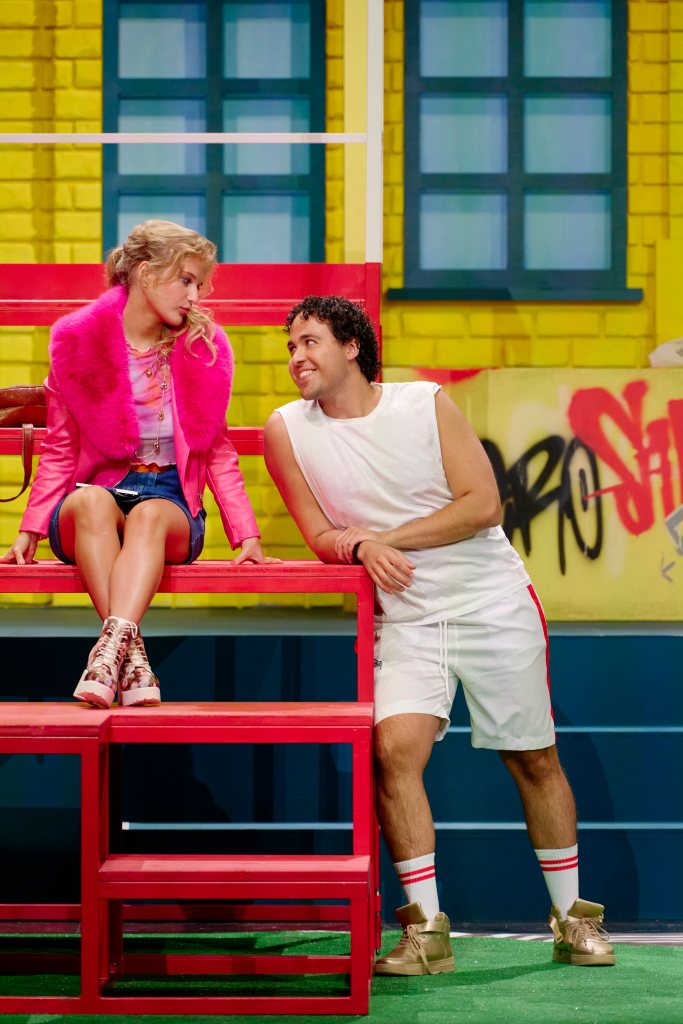
At the Bregenz Festival, Anna Kelo gives the opera a thorough rejuvenation. The nineteenth-century Italian village becomes a high school, and the protagonists become a group of young people searching for love, identity and belonging.
Inspired in part by the Netflix series Sex Education, Kelo creates a high-school world filled with smartphones, selfies and TikTok videos. She explicitly interprets L’elisir d’amore as a coming-of-age story about self-discovery, sexuality, first love and the insecurities of young people.
Fundamentally, this transposition works surprisingly well and may offer a younger generation a more immediate way into Donizetti’s opera. Less convincing, however, is the constant bustle on stage – particularly during Nemorino’s famous aria “Una furtiva lagrima” (“A furtive tear”).
Emanuel Tomljenović sings the aria movingly, naturally and with great lyrical ease, while numerous parallel actions distract from both him and the music. Here, the staging works against rather than with Donizetti.
Dramaturgical stillness does not equate to stagnation. Instead, it creates contrast, focuses attention, and allows emotions to unfold. Without a counterbalance, constant action begins to diminish its impact.
Sets and Costumes
Tinde Lappalainen creates a colourful, playfully exaggerated high-school world with echoes of the 1970s and 1980s as well as rap culture. The schoolyard and bleachers of the first act give way after the interval to Adina’s party.
Nemorino’s trousers, covered with around 700 heart-shaped sequins, are certainly eye-catching but contribute little to a more nuanced characterisation. Dulcamara’s voluminous coat, filled with pockets containing his supposed miracle remedies, works far more convincingly and immediately identifies him as a kind of rap godfather.
Adina’s pink leather jacket and later sequinned dress make her appear more like an influencer than a self-assured young woman. Giannetta, by contrast, undergoes an interesting visual transformation from punk in the first act to an elegant young woman after the interval.
The Orchestra
The energetic Italian conductor Danila Grassi leads the wonderfully sounding Vorarlberg Symphony Orchestra through the score with great drive. The tempi are frequently very fast, at times almost pushed too hard, and the orchestra occasionally overpowers the young voices.
At the same time, Grassi has an excellent sense of large-scale dynamic shaping. She draws both a powerful, full-bodied forte and atmospheric pianissimi from the orchestra – particularly impressive in “Una furtiva lagrima”, Adina’s “Prendi, per me sei libero” (“Take it – I give you your freedom”) and the final choral scene surrounding Giannetta.
The Voices
The production was developed within the Bregenz Festival Opera Studio in cooperation with the international singing competition NEUE STIMMEN (New Voices) of the Liz Mohn Foundation. The project allows young singers to prepare major repertoire roles under professional conditions.
This ensemble is distinguished by vocal agility, good legato, economical breath management, textual clarity and a strong sense of comic timing.
The cast is superbly prepared and communicates a consistent joy in singing and acting – great credit is due to the entire coaching and preparation team.
As Adina, Iana Aivazian has a beautiful, already quite full-bodied soprano and a good legato. For the lightness the role requires, however, the voice occasionally feels somewhat large. Her coloratura passages sometimes seem rushed rather than fully shaped, and the intonation is not always entirely precise. Dynamically, one would wish for greater differentiation and more playful lightness. Her strongest moment of the evening comes in “Prendi, per me sei libero”, where she finds greater calm and musical refinement.
Emanuel Tomljenović forms both the emotional and musical centre of the performance as Nemorino and proves to be an almost ideal choice for the role. His light, well-focused tenor offers an easy upper register, a carrying middle range and naturally flowing legato. He also manages lyrical climaxes without ever forcing the voice.
As an actor, he portrays Nemorino’s clumsiness with considerable charm without slipping into the cliché of the village idiot. Despite the visual restlessness around him, his “Una furtiva lagrima” becomes one of the musical highlights of the evening.
Yiorgo Ioannou initially portrays Belcore as deliberately vain and one-dimensional. His young baritone has not yet fully developed, but it has an appealingly rich, juicy timbre. Already in “Come Paride vezzoso” (“Like the charming Paris”), he demonstrates excellent comic timing. As the evening progresses, both his voice and his character gain increasing presence and profile.
Davide Piva is a striking presence as Dulcamara, both vocally and theatrically, and becomes the comedy’s driving force. He neither lapses into routine buffo caricature nor overplays the good-natured rogue. His great entrance aria, “Udite, udite, o rustici” (“Hear ye, hear ye, country folk”), is characterised by excellent diction and precise timing. His baritone is powerful and colourful, his parlando flexible and his legato secure.
A particular discovery of the evening is Tanja Jannelli as Giannetta. Her full, darkly timbred soprano immediately commands attention. The voice combines substance with lightness, complemented by great musicality and remarkable stage presence. One could only wish that she had been given more to sing.
A Small Chorus with a Big Impact
Anna Kelo deliberately dispenses with a large anonymous chorus. Instead, the group consists of eleven individually conceived personalities. Here, something succeeds that is not always achieved with the principal characters: recognisable individuals emerge, along with a credible social structure. Vocally, too, the ensemble impresses. The small chorus sounds remarkably powerful, homogeneous and precise and never leaves one missing the scale of a traditional opera chorus.
Between Intelligent Updating and Too Much Action
Donizetti’s L’elisir d’amore in Bregenz is undoubtedly colourful, youthful and full of ideas. Yet relevance is not created by smartphones, high-school costumes and pop-cultural references alone.
Not every directorial idea sustains itself throughout the evening. It is precisely in those moments, when the constant bustle subsides, and Kelo places her trust in the characters and in Donizetti’s music, that the production is at its strongest.
Perhaps that is also the real insight of the evening: Donizetti’s L’elisir d’amore does not need any additional magic potion. Its blend of comedy, melancholy and human longing still works entirely on its own.
The premiere audience, in any case, celebrated the young ensemble and the production team with enthusiastic calls of “Bravo!”
Bregenz Festival 2026
Gaetano Donizetti: L’elisir d’amore
Melodramma in two acts
Libretto by Felice Romani after Eugène Scribe’s Le Philtre
Premiere: 17 August 2026, Theatre am Kornmarkt, Bregenz
Conductor: Danila Grassi
Director: Anna Kelo
Set and Costume Design: Tinde Lappalainen
Chorus Master: Jakob Peböck
Orchestra: Vorarlberg Symphony Orchestra
Adina: Iana Aivazian
Nemorino: Emanuel Tomljenović
Belcore: Yiorgo Ioannou
Dulcamara: Davide Piva
Giannetta: Tanja Jannelli
#LElisirDAmore #DerLiebestrank #TheElixirOfLove #GaetanoDonizetti #Donizetti #BregenzerFestspiele #BregenzFestival #Bregenz #TheaterAmKornmarktBregenz #OpernstudioBregenz #Opera #Oper #Belcanto #OperaView #OperaReviews2026 #Opernkritik2026 #OperaLovers #Opernliebe #YoungOperaSingers #JungeOpernsängern #NextGenerationOpera #EmanuelTomljenovic #IanaAivazian #YiorgoIoannou #DavidePiva #TanjaJannelli #DanilaGrassi #AnnaKelo #TindeLappalainen #SymphonieorchesterVorarlberg #NEUESTIMMEN #LizMohnStiftung

