A report on an extraordinary festival, a unique region, and three evenings of German Art Song with exceptional young artists
August 30th, 2025
By Oxana Arkaeva
The Bregenzerwald (Bregenz Forest) is a place where culture and nature enter into a rare symbiosis. Between gentle hills, clear streams, and traditional wooden architecture stands the Angelika Kauffmann Hall in Schwarzenberg – not a monumental concert temple, but a hall whose wood design conveys warmth and acoustic perfection.
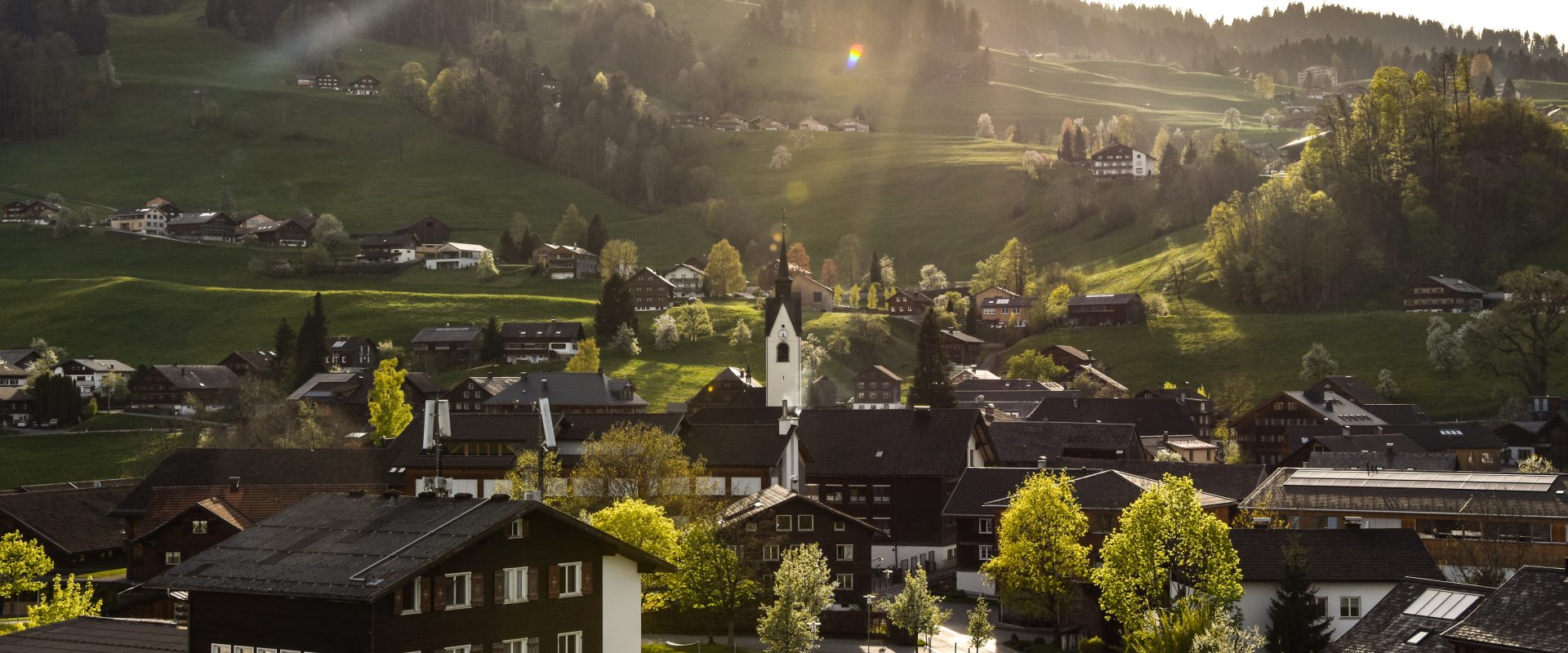
For over two decades, the Schubertiade has been at home here – a festival founded 50 years ago in Hohenems that has long since become one of the world’s most important events for the art of song. Its hallmark: no grandiose productions, no glittering marketing spectacle as in Salzburg, but concentrated artistic intimacy. The connection to the Schubertiade Museum in Hohenems, the rooting in regional cultural history, and the unwavering dedication to Lied as a supreme art form make this festival unique – and a true pilgrimage site for Schubert devotees and chamber music lovers alike.
Another defining element is the work of Bregenzerwald Tourismus GmbH, which welcomes guests from around the world with heartfelt hospitality. Every stay feels like a visit with friends: personal advice, tailored recommendations, and the promotion of regional hosts turn a trip into a decelerated, holistic experience.
Since its beginnings, the Schubertiade has retained its very own charm: small, finely tuned, close to the audience – intimacy instead of distancing monumentality. At its center stands the Lied, complemented by a balanced mix of tradition and rarities. Alongside Schubert, works by Mendelssohn, Schumann, and Strauss are heard, as well as rediscoveries like Johann Vesque von Püttlingen. Historical ambition meets chamber-musical sound culture, supported by its audience, regional structures, and the commitment of the Association of Friends and Patrons.
Three evenings of art song – three unique artistic handwritings
On August 26, 27, and 28, three young artists – tenor Patrik Grahl, Baritone Konstantin Krimmel, and Soprano Katharina Konradi– presented their vision of, among others, the German Lied. A genre that demands the utmost from its interpreters: in perfect singing technique, clear diction, musicality, and tonal nuance. Schubert remains the touchstone, yet his contemporaries broaden the horizon and reveal the diversity of the Lied.
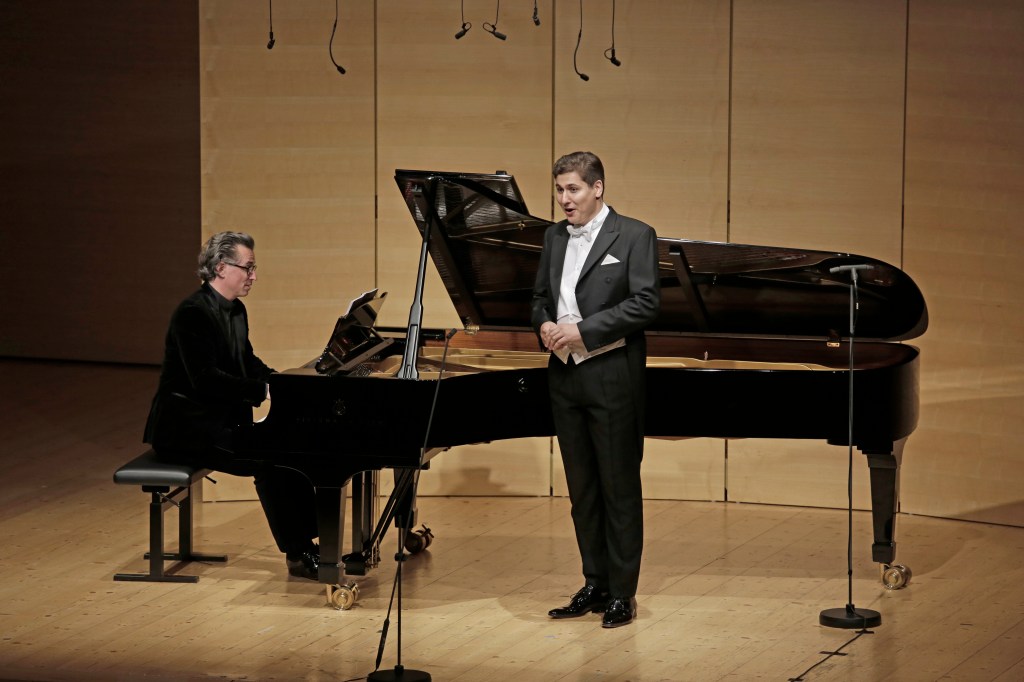
Patrick Grahl & Daniel Heide – Elegance and Clarity
Patrick Grahl, together with Daniel Heide, opened this Triade on August 26th. His tenor convinces with lightness and transparency, technically flawless and finely guided. Modesty shapes his performing style: emotions never seem forced but gain depth through controlled inwardness. His diction is exceptional – every syllable given a meaning. Grahl sings with a remarkable effortlessness that seems to float, yet the intensity is undeniable. Daniel Heide proves a congenial partner: he phrases and breathes with Grahl, creating spaces in which the tenor’s voice shines without ever being overshadowed. Alongside Schubert, Mendelssohn, and Schumann, the program also introduced Johann Vesque von Püttlingen – a jurist and composer, who was among the most important Austrian Lied composers between Schubert and Brahms. A true discovery.

Konstantin Krimmel & Ammiel Bushakevitz – a Winter Journay that warms a heart
On August 27, Schubert’s Winterreise unfolded as a nearly ninety-minute chamber drama – almost the length of a Salome. Within just a few years, Konstantin Krimmel has matured into one of the leading voices of the younger German Lied scene. His interpretation came across as an intense inner monologue: tightly structured, technically assured, and emotionally controlled without lapsing into sentimentality. Amid the blooming Bregenzerwald landscape, a paradoxical yet deeply moving picture arose: winter in summer. Krimmel shaped his presentation with a rounded, resonant voice. At times, it was whisperingly intimate. At others, it was powerfully resounding. His voice was always free of artifice and supported by remarkable clarity of diction. Particularly striking were the fluid register transitions. The coloring of words in “Der Lindenbaum”, “Die Krähe”, and “Der Leiermann” was noteworthy. The visible, palpable personal emotional sentiment was also striking. Ammiel Bushakevitz complemented this vision with refined elegance, tonal sensitivity, and virtuoso technique. Together, they formed a duo of remarkable homogeneity and interpretive depth.
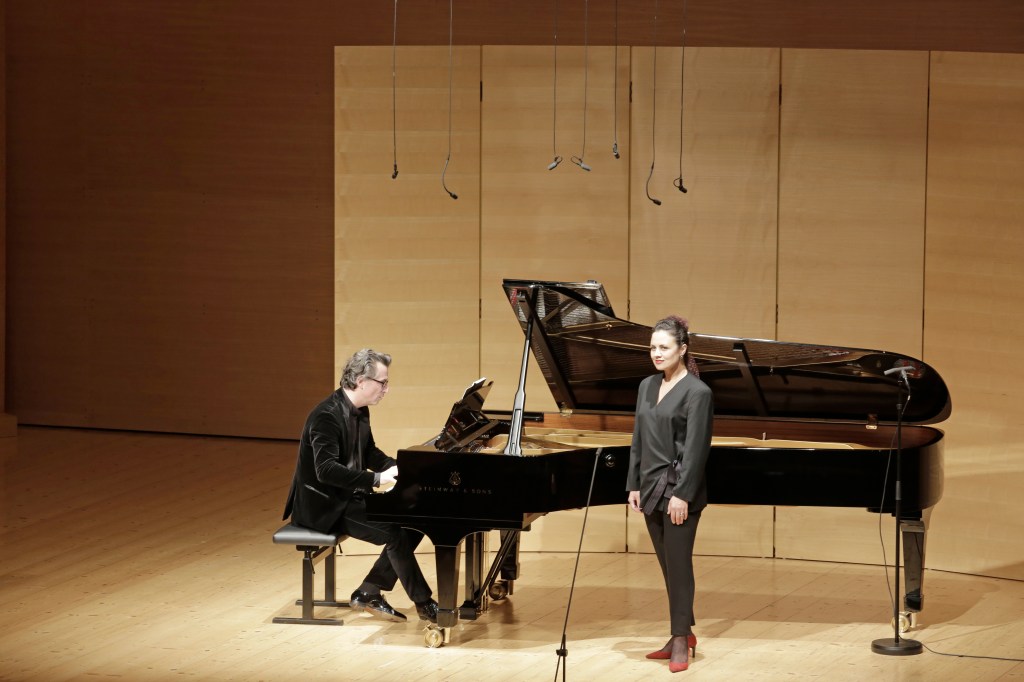
Katharina Konradi & Daniel Heide – Radiance with Shadows
To close the cycle, Katharina Konradi appeared with Daniel Heide on August 28. Konradi, the first soprano of Kyrgyz heritage to be engaged by a German opera house, has long established herself internationally. Her voice is clear and secure at the top. It has metallic brilliance yet maintains girlish lightness in its lyric core. Her program stretched from Beethoven and Schubert to Liszt’s mélodies. Songs like “Oh! quand je dors”,“Ich liebe Dich, so wie Du mich”, “Die Forelle”, and “Auf dem Wasser zu singen” were delivered with tonal beauty, yet at times felt overly controlled, even emotionally tense, leaving a lack of nuanced interpretation. A small disappointment was the last-minute substitution: instead of the announced “Erlkönig”, Schubert’s “Der Zwerg” was performed – a change that caused some irritation among the audience. Daniel Heide once again proved a masterly partner – sensitive, colorful, and finely attuned to the singer.
Three young voices, three distinct artistic signatures – and yet one common thread: Patrick Grahl and Konstantin Krimmel, both with roots in boys’ choirs, and Katharina Konradi, who discovered her love of singing early on, embody the new generation of German Lied interpreters. They continue the tradition while renewing it with fresh impulses. Over these three evenings, Schubertiade 2025 once again presented itself as a festival that values not quantity, but the quality and the depth of the moment. A festival of intimacy – and in that lies its true greatness.
Schubertiade 2026 will mark the 50th anniversary of the first receitals performed
The programme for the 2026 Schubertiade is now available and will open from April, 29th to May, 3rd with a ‘reconstruction of the programme of the first Schubertiade from May, 8th to 16th 1976 in Hohenems as programmed by Hermann Prey.
 Singers, Staging, Orchestra