Miguel Campos Neto on repertoire, responsibility, and exploring new artistic horizons
By Oxana Arkaeva, January 27th, 2026
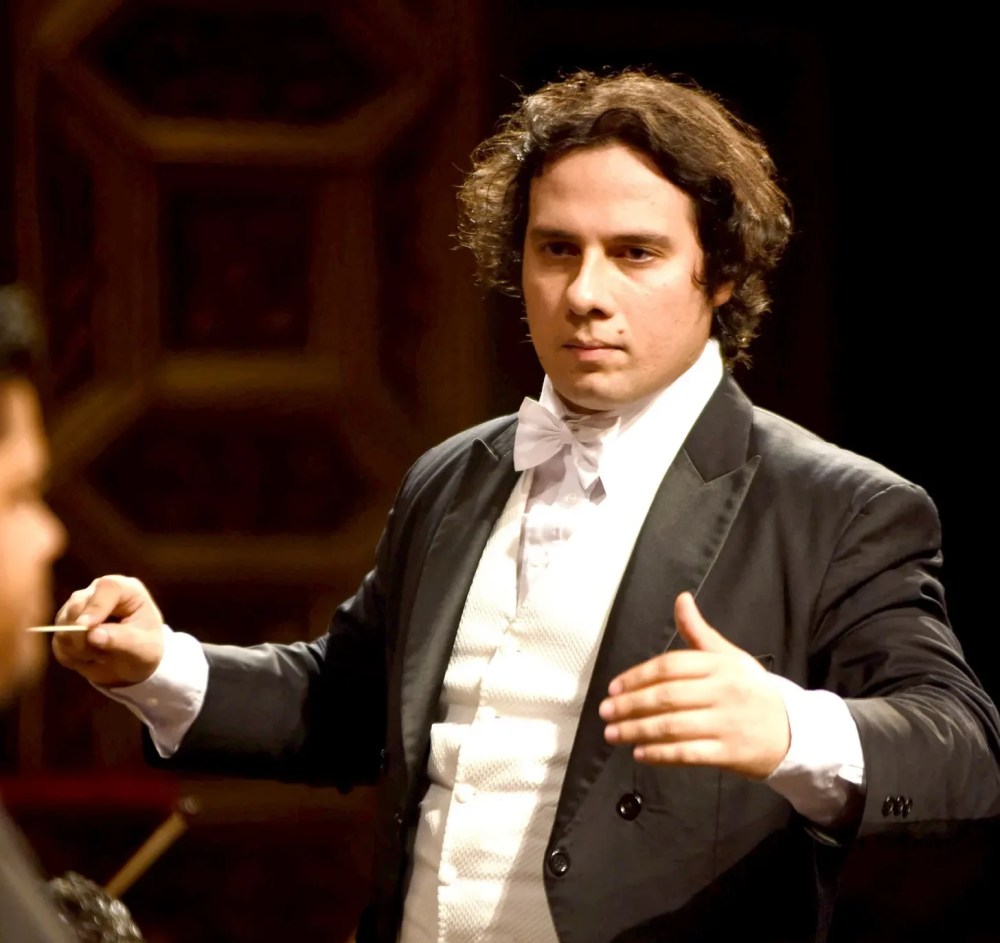
Miguel Campos Neto is a Brazilian conductor with extensive experience in opera and symphonic repertoire. Known for his innovative approach and deep commitment to both the music and the development of young artists. He has served for more than fifteen seasons as Music Director and Principal Conductor of the Orquestra Sinfônica do Theatro da Paz in Belém, where he also leads the opera festival. He was a co-founder and long-time Music Director of The Chelsea Symphony in New York and is presently its Conductor Laureate. His international career includes operatic and symphonic engagements in Europe and the Americas. He has a repertoire centered on Italian opera, French works, and the German symphonic tradition. Notably, his ability to blend cultural influences and his dedication to artistic integrity set him apart in the operatic world. Oxana Arkaeva spoke with Mr. Campos Neto for Opera Views about his career, love for opera, and opera singers, as well as his future.
You are often praised for your singer-friendly orchestral leadership. How do you define this approach today, and where do you see its limits?
The art of conducting opera rests on shaping the human voice in close connection with the orchestra. This requires understanding and planning the singers’ breathing. It is crucial to know when to sustain the musical flow. It is also essential to understand when a phrase can unfold in a single breath. It is essential to distinguish between “technical” breaths and “musical” breaths. The latter are moments when breathing is not strictly necessary but is musically enriching. The limitation of this approach lies in convincing everyone involved. Soloists, choir, and orchestra need to share this vision, sometimes despite their own instincts.
You have said that one should know the score as if one had composed it. How does this mindset influence your rehearsal work with orchestra and soloists?
This idea comes from advice I received from some of my conducting teachers: “Know the score as if you had composed it.” This means not only knowing what is written but understanding why it is written that way and not another. With older repertoire, definitive answers are not always possible. Asking these questions forces you to know the score from the inside out and shape your musical conception. In rehearsal, this becomes effective when musicians sense there is a clear plan behind what you are preparing together. To “play forte here because the composer saves the fortissimo for the last movement” is more enlightening than simply to “play forte because it is marked forte.”
Your productions of Cavalleria Rusticana, Pagliacci, and Il Turco in Italia reflect very different facets of Italian opera. What draws you to this stylistic spectrum?
Italy is the cradle of opera. Since Camerata Fiorentina attempted to recreate ancient Greek theater, they created something entirely new. As a result, music history was never the same. Conducting opera of any style is a privilege. Yet, Italian opera carries a particular sense of authenticity. This occurs within an art form that is among the most flexible and least fixed. As opera spread worldwide, national styles naturally emerged. Nonetheless, there remains a feeling that all operatic traditions are indebted to Italy. While studying and performing Italian opera, one feels in direct contact with the core impulse of the art form. It is the original spark that continues to resonate worldwide.
Your concert program Souvenir, featuring Fazıl Say’s Never Give Up, resonated strongly in a social and political context. What role should music play in today’s public discourse?
Music has always played the same role it plays today. To claim otherwise would ignore works like Finlandia, Eroica, or Shostakovitch’s Leningrad Symphony. The arts have long shaped societal and political change. They achieve this by sensitizing those in power, or by rallying entire nations behind an ideal. From Verdi during the Risorgimento to Puccini in World War I, music has carried collective meaning. Fazıl Say’s concerto is a strong example of contemporary composers continuing to embrace this responsibility.
The General Music Director (GMD) in Europe is often described today as a facilitator rather than an authoritarian figure. Do you agree, and how do you see your own role in this context?
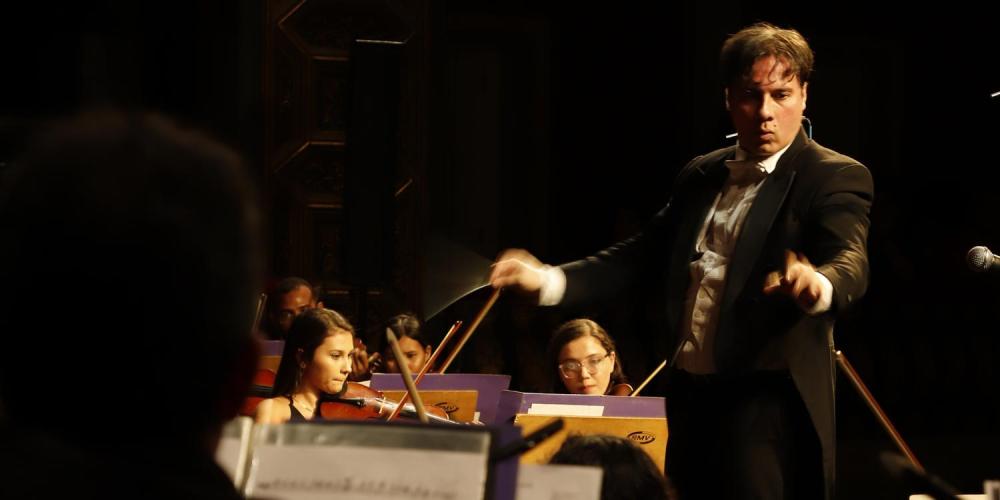
The role of the GMD varies greatly by country and even by city. In South America, the GMD often carries a broad responsibility, combining artistic leadership, podium work, planning, and administration. The Europe and U.S. tend toward greater specialization. I believe that a GMD also remains a conductor and should not be distanced from the podium. Conducting is the best way to understand both musicians and audiences. Only through this direct engagement can one shape a meaningful long-term artistic vision.
When leading a permanent orchestra, what matters more to you: sonic homogeneity or the cultivation of individual artistic voices?
Sonic homogeneity is essential for any large orchestras. The challenge is achieving that unity while preserving individuality. In tutti passages, perfect blend within and between sections is crucial, but when solos emerge, individual voices must sing freely. An orchestra’s expressive power depends on its ability to move seamlessly between collective sound and personal expression.
After many years working in Brazil and the United States, you are increasingly active in Europe. What artistic challenges are you seeking there?
Being born in northern Brazil, I always wanted to give something back to my city and country. After completing my training in New York, I came back and assumed my first position as assistant conductor in Manaus. Then, I accepted a position of General Music Director of the opera and symphony orchestra in my native Belém. Over the next fifteen years, the orchestra has experienced a significant development. There, we presented much of the core symphonic and operatic repertoire for the first time. This included Wagner and Mahler.
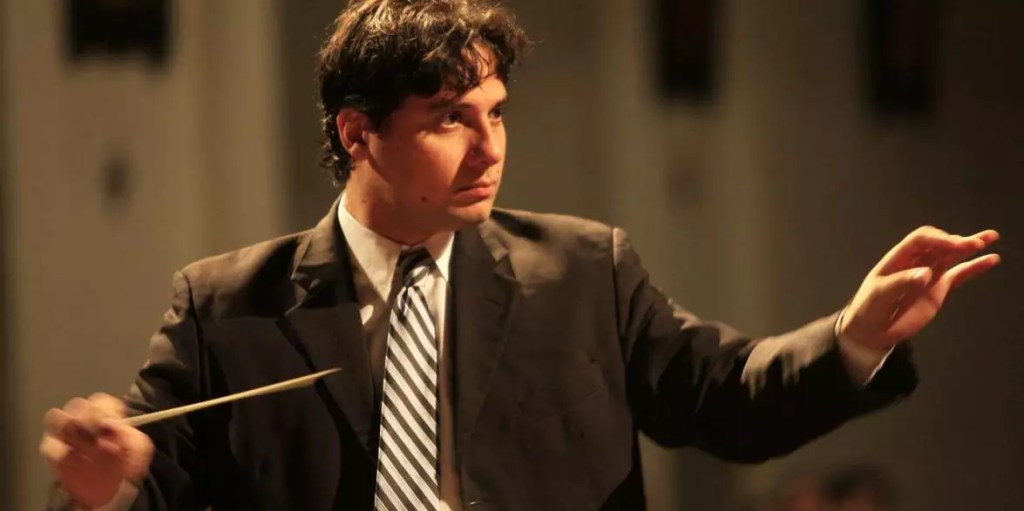
This entire process was deeply rewarding. Nonetheless, it also carried a risk. A young conductor can become isolated or perceived mainly as a “local” artist. For this reason, I gradually expanded my work to Europe and southern Brazil. In Europe, I have worked with professional orchestras in France, Italy, Luxembourg, Hungary, and Romania. I particularly highlight the collaboration with the Orchestre National Avignon-Provence and with Opéra Grand Avignon. I am ready for a new, different artistic challenge. One of my artistic visions is to bring fresh perspectives to well-known repertoire. To introduce Brazilian and South American music to audiences.
You are entering a mature phase of your career. What artistic directions do you want to explore in the coming years? What repertoire or positions would interest you?
I believe that an artist who does not pursue a niche career must continually broaden their artistic scope. For me, the path is clear. I want to continue exploring the core repertoire. I also aim to discover, edit, and perform forgotten works by Brazilian composers. By doing this I will pay particular attention to those from the Amazon region. Global attention is increasingly focused on this part of the world. It is important to show the richness of our musical culture. We need to highlight its place in the wider international discourse.
This means balancing canonical repertoire. One example is performing Shostakovich during this anniversary year. There are projects like the world premiere of an opera. This opera was composed in 1907 by Meneleu Campos. He was a composer from Belém and studied in Milan. I believe career development should grow naturally from focused, purposeful work. One should aim for larger artistic responsibilities. Meanwhile, it is important to stay committed to the position one holds. Exploring both forgotten South American music and the great European tradition defines my artistic vision for the next five years.
More information about Miguel Campos Neto can be ound on Opera Base and Instagram
Mr. Campos Neto is represented by KPKM Kulturmanagement
 Singers, Staging, Orchestra